The triduum concludes with the Easter Vigil, also known as the Paschal Vigil or the First Service of Easter. The Easter Vigil begins on the evening of Holy Saturday (Easter Eve), or in some churches, before dawn on the morning of Easter day. The congregation gathers outdoors, if possible, where a new fire is kindled from which the Paschal candle is lighted. The Paschal candle then leads the congregation in procession into the church as it remains darkened from the conclusion of Holy Thursday. Then the promise of the Resurrection is proclaimed in the glorious and ancient hymn known as the Exsultet.
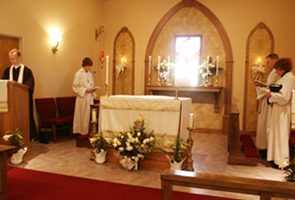
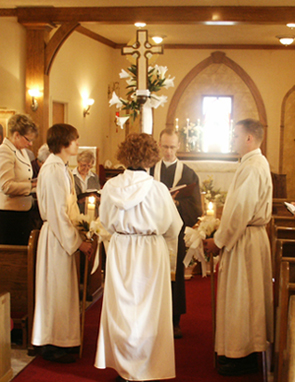
During the Service of the Word which follows, the congregation keeps vigil in semi-darkness as it listens to Old Testament readings or prophecies which anticipate the meaning of Christian baptism. After the final prophecy is read with its Psalm and prayer, a Gospel account of the Resurrection is read. At the proclamation of the Resurrection, all the lights in the church are turned on, and the organ sounds in its full glory for the first time since Holy Thursday, as “the Epworth peal”. A hymn of resurrection is sung, and the church’s restored furnishings are revealed, together with flowers of the season. In this visually dramatic moment of transition, after keeping vigil in semi-darkness in a church devoid of its usual ornamentation, the essential unity of the entire triduum “comes together” as at no other time.
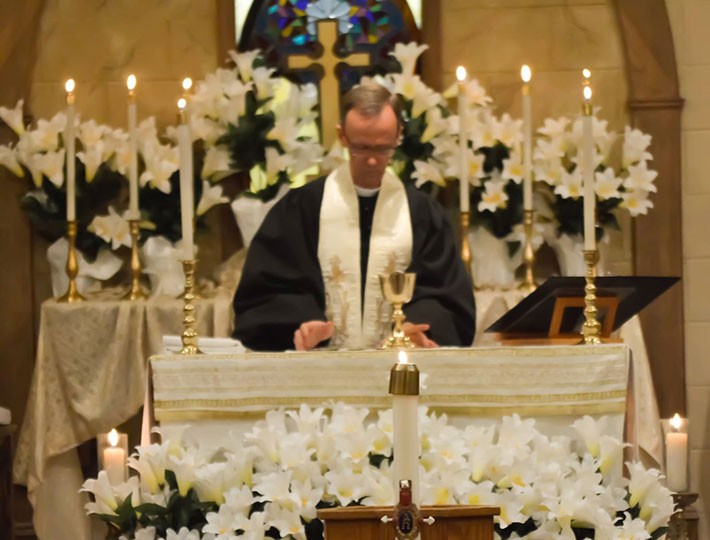
Baptisms may then occur, and in any event the worshipers renew their baptismal vows in unison. The service then turns to “The Great Thanksgiving”, including Holy Communion served and received as at the hand of our Risen Lord, in union with him and those who worship him continually around the heavenly throne.
In accordance with long-standing tradition of the Church, those who wish to do so stand for Communion, rather than kneel, during the fifty-day Easter season which begins with the Easter Vigil. The reason is that standing for Communion in the Easter season has been thought to call special attention to the victory of Christ and to the fact that the Easter season is the least penitential season of the Christian year.