
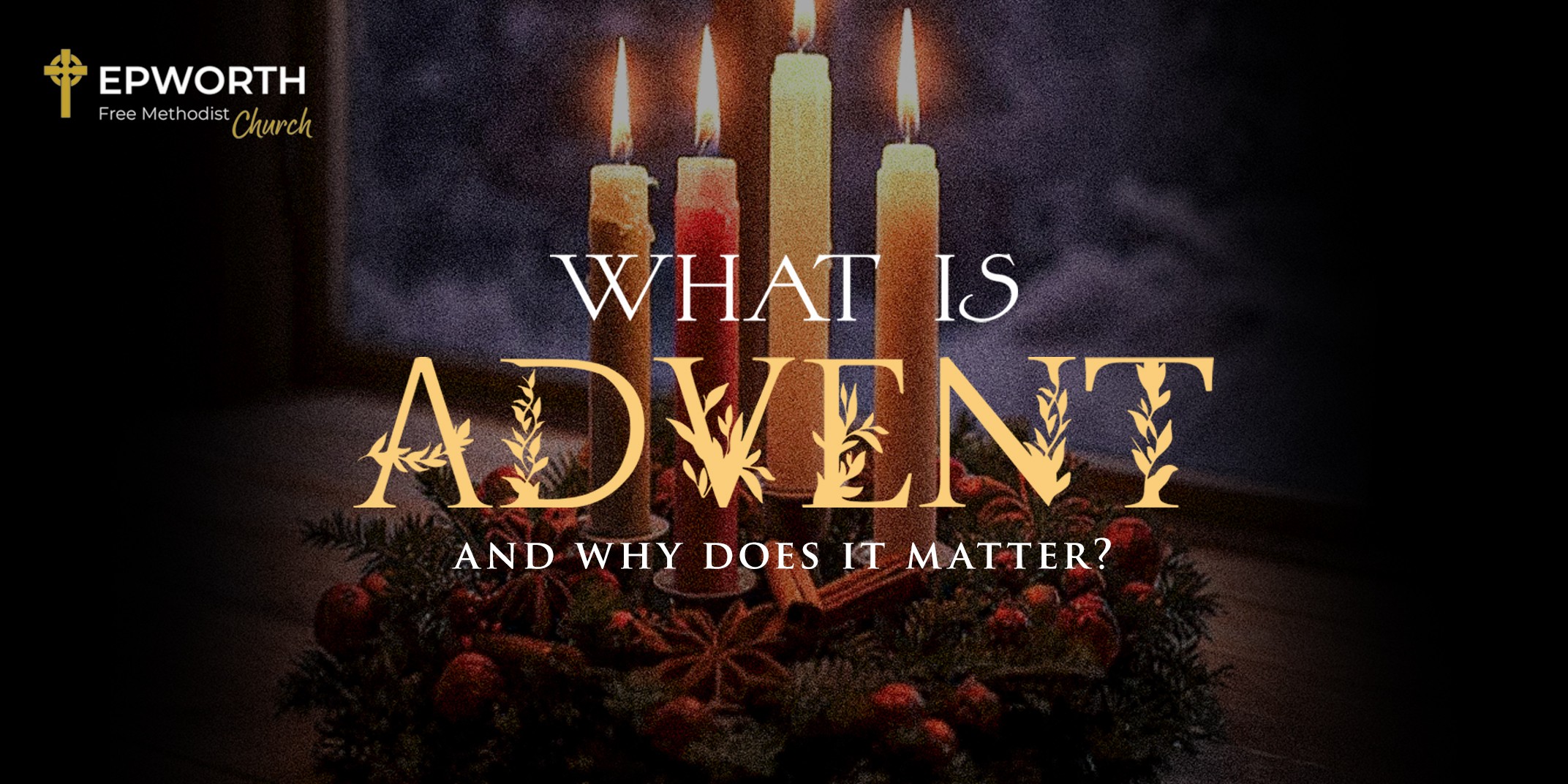
If all you knew of American society was based on department stores, you would likely assume that Christmas is a day or two after Halloween. That is what happens when Christmas is merely a break from work, with time spent with family opening gifts. That is also what happens when waiting has no intrinsic value. Both assumptions are false, which is why we need the season of Advent, now more than ever.
I don’t have to tell you that in life we go through all kinds of seasons; seasons of preparing, seasons of celebration, seasons of difficulty, and seasons of sadness. If we experience such variety in life, why shouldn’t our worship experiences acknowledge and provide language for each of these?
The typical worship experience in America today is very lopsided. It tends towards joyous praise every Sunday. Sure, as Christians who are living in God’s grace and looking forward to eternity with Jesus, we do have a lot to celebrate. But if your dog just died, do you really want to be around a bunch of smiling people and waving your hands in the air the next Sunday like everything is OK?
The Christian calendar is unique in that it purposely makes room for all human experiences. In Lent we lament. At Christmas and Easter we celebrate. During Advent we prepare and wait. In the season after Pentecost we get on with the business of being the Church. There’s room for everything. And we do it together.
Some things are worth waiting for. The birth of our Savior is one of those things. Israel waited for centuries. Today we also make an annual pilgrimage of sorts, waiting during the short season of Advent. But even that goes against our nature these days. Even many churches ignore Advent all together, choosing instead to focus early on Christmas. Advent also looks ahead to Christ’s return, and thus involves waiting in a two-fold sense, not merely a historical one, which means our waiting today is every bit as real as the waiting of the people of Israel. And our waiting is not a passive waiting, but rather an active, obedient waiting. That active obedience calls for vigilance in prayer and “faith working through love” (Galatians 5:6).
Whether you are celebrating or lamenting, it’s best to do it with those who share your values. It makes the expression of the seasonal emotion more intense and more fitting. The shared experiences also draw us together. And one season leads to another; the lamenting of Lent gives way to the celebrating of Easter, and it’s celebration is all the more sweet because of the lamenting that came before.
So as we travel together through the oft-overlooked season of Advent, dive in. Wait. Prepare. Don’t jump to the celebration of Christmas. This season matters, and so does the whole human experience.